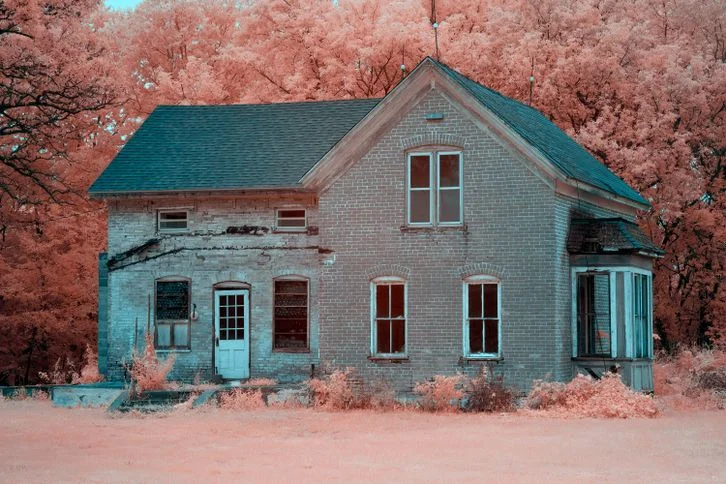
Frankenstein summary and study guide analysis


Mary Shelley crafted an enduring gothic masterpiece that explores the consequences of blind ambition. When people push past natural limits without weighing the stakes, disaster frequently follows. Much like calculating the odds in high-stakes wagers, Victor Frankenstein makes choices that come with immense personal costs. The narrative functions as both an intellectual thriller and a moral reflection on accountability.
| Category | Detail |
|---|---|
| Author | Mary Shelley |
| Original Publication Date | January 1, 1818 |
| Genre | Gothic novel with science fiction elements |
| Main Setting | Geneva, Ingolstadt, the Swiss Alps, Scotland, Ireland, and the Arctic |
| Central Conflict | Victor Frankenstein versus his abandoned creation |
About Mary Shelley
Mary Wollstonecraft Shelley was born in London in 1797 to political philosopher William Godwin and pioneering feminist writer Mary Wollstonecraft. Her mother died shortly after childbirth, leaving young Mary to grow up immersed in her father's rich library and intellectual circle. She later fled to Europe with the Romantic poet Percy Bysshe Shelley, whom she eventually married.
During the rainy summer of 1816 near Lake Geneva, Lord Byron suggested that the gathered companions write ghost stories. Mary conceived the chilling image of a student kneeling beside an assembled life form that stirs into movement. That creative breakthrough grew into an 1818 publication that helped establish modern science fiction.
Frankenstein summary by chapter
Reading this classic text requires tracking its nested frame structure. An English explorer named Robert Walton records letters to his sister, which wrap around Victor's confession, which itself encases the monster's personal story. Below is a comprehensive Frankenstein summary organized across every phase of Victor's harrowing tale. This summary follows the revised 1831 edition of the novel.
Frankenstein letters 1-4 summary
Leading an Arctic expedition toward the North Pole, Captain Robert Walton writes to his sister in England about his ambition and desire for companionship. Ice surrounds and traps the vessel. From the frozen deck, the crew watches a gigantic figure drive a dog sled across the distant terrain. The next morning, the crew rescues an emaciated Victor Frankenstein from an ice floe. Walton tends to the survivor, who decides to share his story to discourage Walton's reckless ambition.
Frankenstein chapter 1 summary
Victor begins his story by recounting his respected family lineage in Geneva and a peaceful childhood. His father, Alphonse Frankenstein, married Caroline Beaufort after helping her through extreme poverty. The devoted parents raised young Victor with consistent care. During a family journey to Lake Como, Caroline visited a poor peasant cottage and found a young girl named Elizabeth Lavenza. The Frankensteins took Elizabeth into their home as Victor's companion, and the two quickly formed an affectionate bond.
Victor's studies and scientific ambition. Chapters 2-4 summary
Victor spends his youth with Elizabeth and his friend Henry Clerval, developing an obsession with early natural philosophies and electricity after seeing lightning destroy a tree. Before Victor leaves for the University of Ingolstadt at seventeen, his mother dies of scarlet fever contracted from Elizabeth. At the university, Professor Waldman directs him toward modern chemistry. Victor isolates himself entirely, experimenting with materials taken from charnel houses in an effort to overcome human mortality.
The creature and the first tragedies. Chapters 5-8 summary
Victor finally brings his creation to life but is immediately horrified by its appearance and abandons it. Soon afterward, Henry Clerval arrives in Ingolstadt and nurses Victor through a severe illness. After Victor recovers, news arrives that his younger brother William has been murdered near Geneva. Victor sees the creature and becomes convinced that it killed William. However, Justine Moritz is accused after William's miniature is found in her possession. Despite Elizabeth's defense of her, Justine is convicted and executed.
Victor meets the creature. Chapters 9-10 summary
Seeking relief from guilt, Victor travels to the Chamounix valley. While crossing the Mer de Glace glacier, he encounters his creation approaching at superhuman speed. Victor reacts with fury, but the creature stays calm and demands a hearing. He explains that abandonment and prejudice forced him into suffering, arguing that a creator owes his work compassion. Victor reluctantly agrees to listen, following the creature to a mountain hut to hear the full story.
The creature's story. Chapters 11-16 summary
Awakening with confused senses, the creature wandered until hostile villagers drove him away with stones. He took shelter in a hovel beside a cottage, observing the blind De Lacey and his children, Felix and Agatha. By watching them, he learned spoken language, basic reading, and mutual affection while performing secret chores to help them. Listening to Felix teach Safie broadened his education in history and society.
After reading Milton's Paradise Lost and Victor's laboratory journal, the creature understood his origins. He introduced himself to the blind father, but the returning family reacted with horror, and Felix attacked him. Deeply hurt, the creature burned the cottage and set out for Geneva. Along his journey, he saved a drowning girl, only to be shot. Near Geneva, he killed young William Frankenstein and framed Justine with a locket, marking a pivotal moment in this Frankenstein summary.
The second creature and the broken promise. Chapters 17-20 summary
The creature demands that Victor assemble a female companion to end his loneliness, promising they will vanish into South America. Fearing retribution against his family, Victor consents. He travels to Scotland with Henry Clerval, eventually parting ways to work alone in the remote Orkney Islands. As he constructs the second form, doubts arise about creating a race of monsters. Spotting the creature watching through the window, Victor tears the incomplete body to pieces. Enraged, the creature vows to appear on Victor's wedding night. Victor deposits the remains at sea, where rough waters carry him away.
Loss and revenge. Chapters 21-23 summary
Victor washes ashore in Ireland, where locals arrest him for the murder of Henry Clerval. After collapsing from fever in prison, Victor receives help from magistrate Kirwin and his father Alphonse. The grand jury rejects the charge after evidence shows that Victor was on the Orkney Islands when Clerval's body was found, and he is released. Returning home, Victor marries Elizabeth, mistakenly believing the creature intends to kill him rather than his bride. On their wedding night in Evian, the monster strangles Elizabeth. Alphonse dies of grief shortly after learning of the tragedy, driving Victor to spend his remaining days hunting his creation across the globe.
Frankenstein chapter 24 summary and final letters
Victor tracks his creation across Russia into the Arctic wastes, following taunting clues left along the route. A sudden thaw breaks the ice, stranding Victor until Walton's vessel rescues him. Victor urges the crew forward, but Walton agrees to turn back south. Victor dies aboard the ship after warning Walton against blind ambition. This closing episode completes the Frankenstein summary within Walton's letters. That night, Walton finds the monster weeping over Victor's body. Admitting that vengeance brought only misery and self-loathing, the creature announces his intent to burn himself on a northern funeral pyre. He leaps through the cabin window onto an ice raft, disappearing into the dark mist.
Frankenstein characters
The novel centers on contrasting figures whose motivations and shortcomings illuminate human nature. Understanding the primary Frankenstein characters allows readers to appreciate how shared flaws produce tragedy across generations.
| Character | Role in narrative | Central motivation | Ultimate fate |
|---|---|---|---|
| Victor Frankenstein | Protagonist and Creator | Thirst for scientific glory and mastery over mortality | Dies of exhaustion and fever pursuing his creation |
| The Creature | Victor's Creation | Craving for human affection, social belonging, and justice | Vows to end his own life on an Arctic funeral pyre |
| Robert Walton | Arctic Explorer and Narrator | Desire for geographic discovery and peer recognition | Abandons his voyage to save his crew, returning home |
| Elizabeth Lavenza | Victor's Adoptive Sister and Bride | Devotion to family peace, harmony, and Victor's well-being | Murdered by the creature on her wedding night |
| Henry Clerval | Victor's Loyal Companion | Passion for humanist scholarship, languages, and friendship | Murdered by the creature; his body is found on the Irish coast |
Secondary Frankenstein characters also shape the ethical stakes of the story. William represents pure innocence destroyed by petty spite, while Justine illustrates the fallibility of social justice systems. De Lacey and his children reflect the paradox of domestic affection paired with knee-jerk social prejudice.
Themes in Frankenstein
Shelley weaves complex moral dilemmas throughout her narrative that remain relevant today. Examining these Frankenstein themes reveals how ethical neglect corrupts scientific progress.
- Reckless ambition consistently carries unforeseen and catastrophic consequences when creators ignore long-term ethical duties.
- Social prejudice based entirely on surface appearance alienates vulnerable individuals and breeds destructive resentment.
- Isolation warps the human psyche, turning natural desires for connection into bitter obsessions.
- Nature provides spiritual renewal and healing, yet humans frequently disrupt its equilibrium through technological hubris.
The text also considers the nature versus nurture debate. The creature begins life with natural benevolence and warmth, only to learn violence from human cruelty. Shelley suggests that individuals are shaped by how their community receives them.
Frankenstein quotes
Shelley's prose captures the emotional torment of figures driven to extremes by pride, neglect, and vengeance. Below are several foundational quotations that illustrate the central tensions of the narrative.
- "Learn from me, if not by my precepts, at least by my example, how dangerous is the acquirement of knowledge and how much happier that man is who believes his native town to be the world, than he who aspires to become greater than his nature will allow."
- "I ought to be thy Adam, but I am rather the fallen angel, whom thou drivest from joy for no misdeed."
- "Beware; for I am fearless, and therefore powerful."
- "I had desired it with an ardour that far exceeded moderation; but now that I had finished, the beauty of the dream vanished, and breathless horror and disgust filled my heart."
These passages highlight the dangerous pride that blinds thinkers to the consequences of their experiments. Victor seeks divine power without considering the responsibilities of parenthood. The creature's words expose the hypocrisy of an intelligent society that judges inward worth solely by exterior beauty.
Top essay topics on Frankenstein
Writing an analytical paper on this novel requires developing clear arguments supported by textual evidence. Academic writers often look for professional guidance like write my paper for me when organizing complex literary arguments.
- Analyze the role of Robert Walton as Victor's psychological double and explain how his final decision contrasts with Victor's life path.
- Discuss how Mary Shelley uses John Milton's Paradise Lost to frame the shifting power balance between Victor and his creation.
- Evaluate whether the creature's violent actions stem from an inherently corrupt nature or society's cruel rejection.
- Examine the presentation of passive female characters like Elizabeth and Justine in relation to nineteenth-century domestic ideals.
- Assess Victor Frankenstein's scientific experiment through modern standards of bioethics and parental responsibility.
- Investigate the healing power of the natural world in the novel and how industrial ambitions corrupt that balance.
Final thoughts
Mary Shelley constructed an enduring narrative about the hidden costs of blind ambition. Victor Frankenstein risked everything on a single obsession, losing his family, peace, and life to the fallout. This detailed Frankenstein summary demonstrates that genius without empathy leads straight to ruin.
Modern debates over artificial intelligence, genetic engineering, and scientific ethics echo the warnings raised in this novel. Readers who look beyond the horror tropes find a poignant examination of human frailty. Taking accountability for what we introduce into the world remains the ultimate moral test.
FAQ
-
Is Frankenstein real?
-
How old was Mary Shelley when she wrote Frankenstein?
-
Where does Frankenstein take place?
-
How many chapters are in Frankenstein?
-
Why is Frankenstein called the Modern Prometheus?