Lab report topics for college students

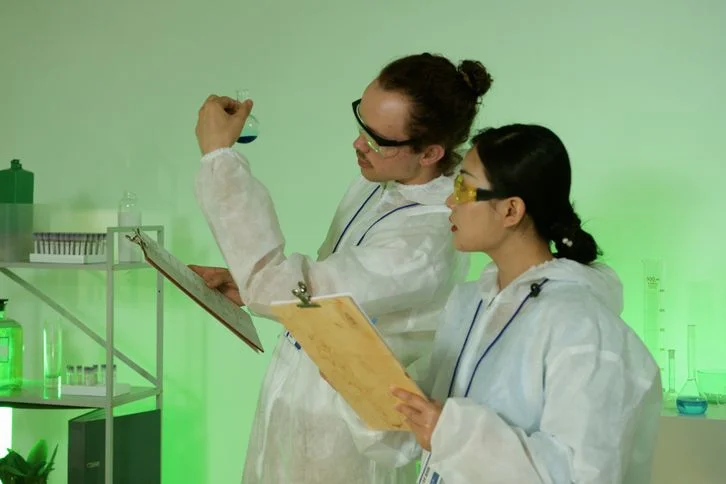
Choosing the right experiment can make the whole assignment easier. Strong lab report topics are specific, testable, safe, and realistic for the equipment and time you have. They also give you enough data to analyze, so the paper does not become a basic description of what happened in class.
In summary, a good topic should help you ask a clear research question, collect measurable results, and explain why the findings matter. Before choosing, check your instructions, available materials, course level, and safety rules. You can also use this guide with our lab report writing resource when you are ready to plan the full paper.
- A strong topic is narrow enough to test in one experiment.
- A useful topic connects a procedure to a measurable outcome.
- A realistic topic fits your lab access, deadline, and course level.
- An academic topic gives you room to discuss patterns, limitations, and possible errors.
How to choose a good lab report topic
The best lab report topics do not always sound complicated. In many cases, the strongest paper comes from a simple experiment with clear variables and reliable measurements. Your goal is to show scientific thinking. That means forming a hypothesis, following a method, recording observations, and interpreting results in a logical way.
Start by checking whether your instructor wants a specific discipline, such as biology, chemistry, physics, psychology, or environmental science. If the task is open, choose a subject you understand well enough to explain clearly. A difficult experiment may look impressive, but it can weaken the final paper if you cannot control the variables or explain the outcome. For chemistry assignments, our chemistry lab report guide can help you connect the topic to the correct structure and analysis style.
- Define the purpose of the experiment. Decide whether you want to compare, measure, observe, or test a cause-and-effect relationship.
- Choose variables you can control. A good topic usually has one independent variable and one dependent variable that can be measured accurately.
- Check safety and accessibility. Avoid materials, chemicals, or procedures that require supervision you do not have.
- Make sure the results can be discussed. The topic should allow you to explain patterns, possible errors, and the meaning of the data.
- Match the topic to the required format. Think about how you will write the abstract, methods, results, discussion, and conclusion before committing.
You should also think ahead to the writing stage. The topic you choose affects every section of your lab report. If the experiment has weak measurements, the results section may feel vague. If the topic has no clear hypothesis, the discussion may become repetitive. When the report requires an abstract, you can review our lab report abstract guide before drafting the final version.
| Quality | What it means | Example |
|---|---|---|
| Specific | The topic focuses on one clear relationship. | How water temperature affects sugar dissolving time. |
| Measurable | The outcome can be recorded with numbers or clear observations. | Plant height, reaction time, pH level, or mass change. |
| Safe | The experiment uses appropriate materials and procedures. | Household materials or supervised classroom chemicals. |
| Analytical | The results support interpretation, not just description. | Comparing data trends across repeated trials. |
List of 80 best lab report topics
Biology lab report topics
- The effect of blue and white light on basil seedling growth.
- Yeast fermentation speed at room temperature and warm temperature.
- Seed germination success in sand, clay, and potting soil.
- Salt concentration and water movement in plant cells.
- Heart rate recovery after walking, jogging, and stair climbing.
- Root development in seeds exposed to water, tea, and sugar solution.
- Fertilizer strength and leaf growth in young bean plants.
- Enzyme activity changes in cold, room-temperature, and warm conditions.
- Safe bacterial colony growth under different handwashing methods.
- Plant height differences under natural light and LED light.
Chemistry lab report topics
- Sugar dissolving time in cold, warm, and hot water.
- Acidity levels in common drinks using pH test strips.
- Reaction speed when an effervescent tablet is whole, broken, or crushed.
- Reaction rate changes with different solution concentrations.
- Water hardness differences in tap, bottled, and filtered samples.
- Crystal size development during slow and fast evaporation.
- Antacid effectiveness in neutralizing an acidic solution.
- Electrical conductivity in saltwater, sugar water, and distilled water.
- Boiling point changes after adding salt to water.
- Dilution effects on the pH of vinegar solutions.
Physics lab report topics
- Rolling object speed at different ramp angles.
- Friction differences on cardboard, fabric, wood, and plastic.
- Pendulum swing time with short, medium, and long strings.
- Acceleration changes for carts with different added weights.
- Heat loss through paper, foil, cloth, and plastic covers.
- Bounce height results for balls dropped on different surfaces.
- Sound intensity changes as distance from the source increases.
- Spring stretch under light, medium, and heavy loads.
- Motion patterns of objects released from the same height.
- Air resistance effects on falling paper shapes.
Environmental science lab report topics
- Water quality differences between tap, filtered, and rainwater samples.
- Water retention rates in sand, clay, and garden soil.
- Plant growth outcomes in soil with and without compost.
- Soil erosion patterns on flat, sloped, and covered surfaces.
- Rainwater and tap water acidity after a local weather event.
- Algae growth response to different light exposure levels.
- Seed germination in clean soil and soil mixed with safe household contaminants.
- Decomposition speed of paper, fruit peels, and biodegradable packaging.
- Evaporation rates in shaded, sunny, and indoor locations.
- Soil moisture changes with mulch, gravel, and uncovered soil.
Psychology lab report topics
- Concentration accuracy during quiet, music, and background-noise conditions.
- Reaction time differences after short and long sleep durations.
- Memory recall results with black, blue, and red text.
- Task accuracy during focused work and divided attention.
- Focus levels during silence, instrumental music, and lyrical music.
- Decision-making accuracy under relaxed and timed conditions.
- Short-term memory performance with familiar and unfamiliar word lists.
- Reaction time changes before and after a five-minute break.
- Reading comprehension results with and without visual distractions.
- Performance improvement after repeated practice on the same task.
Easy lab report topic ideas
- Ice melting speed in sunlight, shade, and room temperature.
- Paper towel absorbency across three household brands.
- Bean plant growth with daily watering and every-other-day watering.
- Seed sprouting results in cotton, paper towels, and soil.
- pH differences in water, soda, milk, and orange juice.
- Pulse changes before and after one minute of jumping jacks.
- Toy car travel distance on tile, carpet, and cardboard.
- Ball bounce height after drops from different heights.
- Freezing time for plain water and saltwater.
- Focus score changes during a short task with and without noise.
Lab report ideas for high school students
- Plant growth response to low, medium, and high light intensity.
- Yeast activity in sugar solutions with different temperatures.
- Water drainage differences in sandy, loamy, and clay soil.
- Rolling speed changes when ramp height increases.
- Seed germination success at different pH levels.
- Friction force on smooth, rough, and rubber surfaces.
- Cleaning effectiveness of vinegar, soap solution, and baking soda mixture.
- Plant height response to low, medium, and high fertilizer levels.
- Heat conduction in metal, wood, plastic, and glass materials.
- Reaction time patterns after different amounts of sleep.
Lab report topics for college students
- Enzyme reaction efficiency across acidic, neutral, and basic pH levels.
- Chemical reaction rate under different molar concentrations.
- Osmosis in potato tissue exposed to varied salt solutions.
- Electrolyte solution conductivity at different concentration levels.
- Crystal formation patterns under controlled cooling conditions.
- Inclined-plane acceleration with changing object mass.
- Microbial growth variation after different surface-cleaning methods.
- Hardness levels in municipal, bottled, and filtered water samples.
- Memory recall and task accuracy under controlled noise conditions.
- Plant biomass changes in soils with different organic matter content.
Topics to avoid in a lab report
Not every science-related idea is suitable for a lab report. Some topics are too broad, too risky, too theoretical, or too difficult to measure. A weak topic can make the assignment harder because it limits what you can prove with actual data. When reviewing lab report topic ideas, avoid topics that sound interesting but do not fit the purpose of a controlled experiment.
- Topics that are too broad should be narrowed before writing. Climate change, human health, or pollution can work only if you focus on a measurable part of the issue.
- Topics without measurable variables usually do not work well. A question based only on opinion or general observation may not support a scientific report.
- Topics requiring unsafe materials should be avoided. Do not choose experiments involving hazardous chemicals, pathogens, fire risks, or unsupervised human testing.
- Topics that need expensive equipment may create problems. If you cannot access the tools required for reliable data, choose a simpler experiment.
- Topics with ethical concerns need instructor approval. Human-subject research, animal testing, and privacy-related experiments must follow strict academic rules.
For example, “the effect of pollution on the planet” is too broad for a short report. A better version would be “the effect of soil contamination on seed germination,” assuming your instructor approves the materials. Similarly, “how caffeine affects people” may be too general and ethically complicated, while “how background noise affects reaction time in a simple online task” may be easier to manage in an introductory psychology course.
The safest choice is usually a topic that balances simplicity with analysis. You want an experiment that can be repeated, measured, and explained. You should also be able to identify possible errors, such as inconsistent measurements, small sample size, environmental conditions, or timing issues. These details make your lab report more credible because they show that you understand both the strengths and limits of the experiment.
Conclusion
The right topic gives your science assignment a stronger foundation. Good lab report topics help you form a clear hypothesis, collect meaningful data, and explain the results in an academic way. Whether you choose biology, chemistry, physics, environmental science, or psychology, focus on a question that is specific, measurable, safe, and realistic for your course.
Use the topic list above as a starting point, then adapt the wording to match your assignment requirements. Strong lab report ideas do not need to be overly complex. They need to support careful observation, logical analysis, and a well-organized final paper. If you need help after choosing a topic, you can use our guide on how to conclude a lab report or get professional report writing help for a broader academic assignment.
If the deadline is close or the experiment is difficult to explain, you can also use expert support to organize, edit, or complete the final draft. Our write my lab report service can help you turn your data, notes, and instructions into a polished academic paper.
FAQ
-
What are good lab report topics for college students?
-
How do I choose between different topic options?
-
Can I use a simple experiment for a college lab report?
-
What should I do after choosing a lab report topic?