How to write a public policy essay on rural transportation and social access

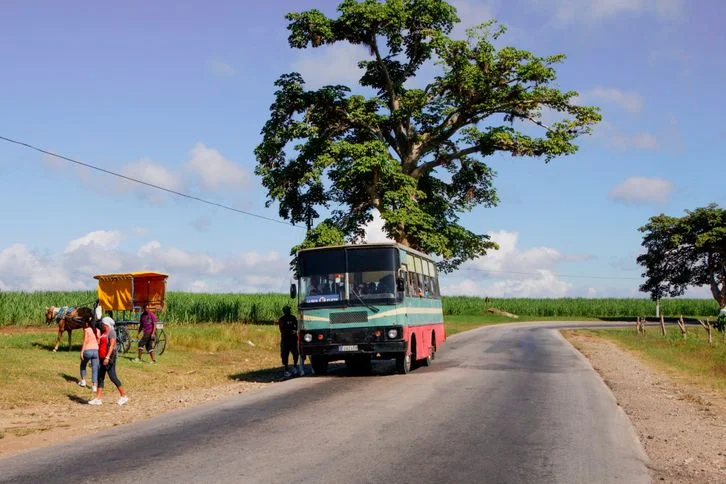
Rural transportation looks simple until it becomes a public policy question. A bus route either operates or it does not, but policymakers must decide much more: who benefits from the service, who pays for it, what happens when ridership falls, whether private operators can serve low-density regions, and how the loss of transportation affects access to healthcare, education, employment, and other essential services.
That complexity makes rural mobility a strong topic for a public policy essay. It allows you to work with economic evidence, demographic data, government reports, geographic patterns, social equity, and competing definitions of the public interest.
A good essay should therefore do more than describe transportation problems. It should identify a policy problem, define the criteria by which possible responses will be judged, analyze evidence, consider trade-offs, and defend a conclusion.
What makes rural transportation a public policy issue?
Public policy problems usually emerge when individual market decisions do not produce outcomes society considers adequate.
Transportation illustrates this clearly.
A bus company may judge a route according to passenger numbers, fares, fuel costs, labor, equipment, and other operating expenses. Government may have to consider additional effects:
- whether residents without cars can reach medical care;
- whether seniors and people with disabilities remain mobile;
- whether workers can reach employment;
- whether smaller communities remain connected to regional centers;
- whether transportation costs fall disproportionately on lower-income households;
- whether alternative services exist;
- how much taxpayers should contribute to maintain access.
The central distinction is between commercial value and social value.
A route can perform poorly financially while still providing substantial social benefits. Conversely, describing transportation as socially useful does not automatically prove that every route or subsidy is efficient.
Your essay becomes analytical when you examine that tension rather than assuming one side is correct.
Turn the broad topic into a policy question
“Rural transportation” is too broad for a strong essay. Convert it into a question that requires a policy judgment.
For example:
Weak question: Why is transportation important in rural areas?
This encourages description.
Stronger question: Under what conditions should state governments subsidize intercity transportation in low-density rural communities?
Now you must establish conditions and evaluate alternatives.
Other workable questions include:
How should policymakers measure the social value of rural intercity transportation?
Should governments maintain transportation routes that cannot recover their operating costs through fares?
Can demand-responsive transportation replace fixed-route intercity bus service in rural regions?
How should transportation policy address mobility inequalities between metropolitan and rural residents?
What responsibilities do governments have when private carriers cannot profitably serve isolated communities?
Notice that each question contains a conflict, decision, or trade-off. That is what gives a public policy essay something to analyze.
Build a thesis around criteria, not personal preference
A policy thesis should state more than “I support rural buses.”
Instead, explain why a particular policy is justified and under what conditions.
Consider this thesis:
State governments should support rural intercity transportation where the measurable benefits of access to essential services and regional connectivity exceed the cost of intervention, but subsidies should be tied to service need, utilization, and periodic evaluation of lower-cost alternatives.
This position gives the essay several analytical tasks. You would need to define essential access, examine costs, identify beneficiaries, consider alternatives, and explain how performance should be reviewed.
A more critical thesis could argue that traditional fixed-route buses are inefficient in very low-density regions and that transportation funding should shift toward demand-responsive shuttles or coordinated regional services.
Either argument can work. What matters is whether the evidence supports it.
Use a real transportation case to understand the policy problem
Case studies make abstract policy concepts easier to evaluate.
The Saskatchewan Transportation Company offers a useful example. STC was a provincial Crown corporation established in 1946 and historically provided passenger and parcel services across Saskatchewan. In testimony concerning intercity bus regulation, STC representatives emphasized the difficulty of serving a geographically large province with a sparse rural population and explained that many routes were not commercially profitable.
Its final 2016–17 reporting period shows the scale of the policy question. STC carried 185,678 passengers and served 253 Saskatchewan communities, while the provincial government cited declining ridership and increasing subsidy requirements when explaining the decision to wind the organization down. Vehicular operations ended May 31, 2017.
The value of this example is not that Saskatchewan provides a universal answer. It demonstrates what your essay should investigate:
Need: Who depends on the service?
Coverage: Which places would otherwise have limited transportation?
Cost: What public expenditure is required?
Demand: How many passengers actually use the system?
Alternatives: Could private carriers, shuttles, ride-sharing, taxis, or community transportation perform the same function?
Distribution: Which groups bear the consequences of maintaining or eliminating service?
For additional context on the transportation side rather than the essay-writing methodology, the related discussion on stcbus.com, Why Intercity Bus Service Mattered to Rural Saskatchewan: Mobility, Access, and Community Connection, examines the relationship among rural mobility, infrastructure, and community access.
That makes the stcbus.com material useful as a case-study starting point, while your academic essay should widen the evidence base beyond a single transportation system.
Distinguish the evidence you need
A strong policy essay rarely depends on one type of source.
Government and administrative sources
Government reports, transportation department publications, legislative testimony, budgets, audits, and agency annual reports can provide information about:
- ridership;
- expenditures;
- subsidies;
- routes;
- service coverage;
- regulations;
- official policy goals.
These sources are valuable because they often contain primary administrative evidence.
However, an official source is not automatically neutral. A government explaining why it eliminated a program may emphasize different evidence from an agency defending that program.
Always ask why the document was produced.
Academic research
Peer-reviewed studies can help you analyze concepts such as:
- transportation disadvantage;
- accessibility;
- rural isolation;
- transport poverty;
- public goods;
- market failure;
- mobility equity;
- social exclusion.
Academic literature is especially important when moving from a single case to a broader conclusion.
Demographic and geographic evidence
Population density, age distribution, household vehicle availability, distance to hospitals, employment centers, and regional population trends can explain why transportation demand differs between places.
Maps can also reveal something tables may hide. A low-ridership route might cover a large territory containing communities with few alternatives.
Qualitative evidence
Interviews, public hearings, consultation reports, community testimony, and local reporting can reveal consequences that aggregate statistics miss.
For example, ten passengers per day may appear insignificant in a provincial dataset. The policy interpretation changes if several passengers depend on the route for recurring medical appointments.
Qualitative evidence should not replace quantitative analysis, but it can explain what the numbers mean.
Evaluate sources instead of merely collecting them
Policy research requires source criticism.
For every important source, examine four questions.
Who produced it?
A transportation agency, government ministry, advocacy organization, private carrier, and academic researcher may approach the same issue differently.
Why was it produced?
An annual report measures performance. A budget announcement justifies a government decision. A lobbying document attempts to influence policy.
Purpose affects framing.
What does the evidence actually measure?
Ridership measures trips or passengers, depending on methodology. It does not automatically measure social necessity.
Operating cost measures financial expenditure. It does not automatically measure the full social cost or benefit of a service.
Can the claim be corroborated?
Important claims should ideally be checked against another credible source or dataset.
If an agency says a route is essential, look for usage evidence. If government says a service is economically unsustainable, examine the financial reports behind the claim.
Corroboration makes your analysis harder to dismiss.
Compare policy options using the same criteria
One common mistake is to describe one policy in detail and dismiss alternatives in a sentence.
Instead, create consistent evaluation criteria.
Suppose your alternatives are:
- maintain a subsidized fixed-route bus network;
- replace some routes with demand-responsive transportation;
- subsidize private carriers;
- provide targeted mobility assistance to eligible residents.
Evaluate each option using the same criteria:
Accessibility: How many people can actually use it?
Cost: What is the cost to government and users?
Reliability: Can passengers depend on the service?
Equity: Which groups benefit or lose?
Geographic coverage: Can it serve dispersed populations?
Administrative feasibility: Can the policy realistically be implemented?
Long-term sustainability: Is the model resilient to demographic and fiscal change?
This turns the essay from opinion into structured policy analysis.
Connect transportation to social access
Do not treat mobility as the final outcome.
Transportation is often an intermediate resource. People travel because they need something located elsewhere.
A useful analytical chain is:
transportation availability → mobility → ability to reach opportunities or services → social outcomes
For example:
No reliable transportation
→ difficulty reaching a regional hospital
→ missed or delayed appointments
→ reduced healthcare access.
Or:
Limited intercity service
→ fewer feasible commuting options
→ smaller employment search area
→ reduced labor-market access.
This is why a public policy essay should distinguish between transportation provision and social access. A bus route is a policy instrument; access is one of the outcomes policymakers may be trying to improve.
Write analytical body paragraphs
A strong policy paragraph generally performs four jobs.
First, make a claim.
Second, present evidence.
Third, interpret the evidence.
Fourth, connect the interpretation to your policy argument.
For example:
Low ridership alone is an incomplete measure of whether rural transportation should receive public support. Low-density communities naturally produce fewer passengers than metropolitan corridors, yet individual trips may provide access to services unavailable locally. Ridership figures should therefore be evaluated alongside geographic coverage, availability of alternatives, passenger characteristics, and the purposes for which residents travel. This broader framework allows policymakers to distinguish an underused service from a low-volume service that performs an important accessibility function.
The paragraph does not merely state that rural buses matter. It explains why one commonly used metric may be insufficient.
That analytical step is the heart of academic policy writing.
Common mistakes to avoid
Treating subsidies as proof of failure
A subsidized service is not necessarily ineffective. Governments routinely fund infrastructure and services because their benefits extend beyond direct user payments.
The correct question is whether the subsidy produces sufficient public value relative to alternatives.
Ignoring costs because the goal is socially valuable
The opposite mistake is equally serious.
Calling transportation essential does not eliminate budget constraints. A credible essay must consider cost effectiveness.
Generalizing from one case
STC can illustrate rural transportation problems, but Saskatchewan is not identical to rural Montana, Iowa, Alaska, or another jurisdiction.
Explain which characteristics are transferable and which are specific to the case.
Confusing evidence with advocacy
A source can contain useful evidence even when its author has a policy preference. Identify the perspective and verify major claims rather than rejecting or accepting the entire source.
Writing the conclusion before doing the analysis
Do not choose evidence only because it supports the position you already prefer.
A stronger process is:
question → criteria → evidence → comparison → conclusion
That sequence makes your thesis defensible.
From research notes to a finished essay
Once the evidence is organized, structure the final paper around the policy problem rather than around individual sources.
A practical structure is:
Introduction: define the problem, scope, and thesis.
Policy context: explain the transportation system, population, geography, and institutional setting.
Evaluation criteria: state how you will judge policy options.
Evidence and analysis: evaluate accessibility, cost, equity, demand, and other relevant factors.
Alternatives: compare realistic policy responses.
Counterargument: address the strongest objection to your position.
Recommendation or conclusion: explain which policy is preferable and why.
If you have completed the research but need support converting evidence into an organized academic argument, our write my paper for me option can help with drafting and structure while leaving you with the responsibility to review the reasoning, sources, and final submission requirements.
Final checklist
Before submitting a public policy essay on rural transportation, confirm that you can answer these questions:
- Have I defined a specific policy problem rather than merely described rural transportation?
- Does my thesis state a defensible policy judgment?
- Have I defined the criteria used to compare alternatives?
- Do I distinguish financial performance from social value?
- Have I examined both quantitative and qualitative evidence?
- Have I checked who produced my most important sources and why?
- Have I corroborated major factual claims?
- Do my paragraphs interpret evidence instead of simply reporting it?
- Have I considered realistic alternatives and counterarguments?
- Does my conclusion follow from the evidence presented?
Conclusion
The strongest public policy essays on rural transportation recognize that mobility involves competing objectives. Governments may want affordable access, broad geographic coverage, fiscal responsibility, environmental efficiency, private-sector participation, and equitable treatment at the same time. Those goals do not always point toward the same policy.
Your job is not to assume that every rural route must survive or that every unprofitable service should disappear. It is to establish relevant criteria, gather evidence, identify who benefits and who bears the costs, compare realistic alternatives, and explain which policy produces the most defensible outcome.
Cases such as Saskatchewan's former intercity bus network make the issue concrete. The academic value comes from using the case to ask a broader question: how should public policy measure the value of mobility when commercial demand and social access do not perfectly align?