How to start a research paper - your academic step-by-step guide


So, how to start a research paper that leaves an impression? If your professor has already provided you with paper guidelines and instructions, it may be perceived as a serious academic challenge for students who have no idea how to write a research paper or format it correctly. Knowing your academic direction and setting the foundation for your future research will help you save time later in the writing process. A well-framed beginning is half the success, as it allows readers to understand your claims easily and frame the narrative. If you want to avoid excessive rewriting and poorly constructed arguments, follow our instructions and take a closer look at the steps covered in this guide:
- Choose a research topic.
- Research the topic.
- Create a thesis statement.
- Plan the structure.
- Write the introduction.
- Check your writing.
- Create a title page.
What is a research paper?
Before you set out on your writing journey and learn how to start a research paper, get a clear idea of its definition and meaning. This is a standard college and university assignment that teaches students to review large amounts of data, analyze it and provide viable solutions to the problems. Sometimes students get to overturn traditional theories and develop new approaches.
A research paper is a lengthy text with a rigid structure and a huge set of requirements. Read them carefully to understand what your professor expects from you. Otherwise, you risk missing the point of the assignment and failing the paper or the class. To avoid this and ensure you submit high-quality research every time you are given the instructions, you can rely on a professional to write my paper for me, which is an effective strategy for beginner scholars.
How to start a research paper
Today, we’ll go through the critical stages of the prewriting process and get the introduction out of the way. Follow our advice, and you’ll get the research paper done in no time.
-
Choose a research topic
- Choose an interesting general subject according to your assignment requirements. It can be anything from waste recycling to virtual reality.
- Apply filters of theme, place and time to narrow down the general subject. There can be dozens of focus points to any topic. Choose the one you find interesting. Time and place will help you narrow down the issue even more. You can study the effects of virtual reality headsets on American schoolchildren over the last decade.
- Formulate a research question. Once you have your filters in place, you can develop a research question, which is another best way to start a research paper. Here is an example: How has introducing the virtual reality headsets over the last decade affected the health of schoolchildren in the USA?
- Test your research question. Check whether it is suitable for a research paper. It should be controversial, reasonable, and consequential. In addition, there should be viable opposing arguments to your viewpoint, and the consequences of the issue should be significant.
-
Research the topic
It’s not enough to read books and journals to know how starting your research paper really works; you won’t be able to remember everything. You’ll waste your time looking up the quotes once you start writing. Instead, prepare a stack of post-it notes and take copious notes as you read. For every quote or fact, jot down its source and page. This way you will create an outline and include citations without going back. After you have collected enough notes, organize them by the aspect of the topic it concerns. These stacks of notes will serve as a basis for your academic paper outline. However, if this stage seems too time-consuming, you can always buy research paper online from our service and let our writers handle the deep research for you.
If you are wondering about the list of possible sources that you can use to start an introduction smoothly, here are some examples:
- Peer-reviewed academic journals
- Relevant academic books and publications
- University library databases
- Government-issued reports
- ERIC, Google Scholar, and library/field-specific databases (e.g., JSTOR, EBSCOhost, ProQuest, PubMed, PsycINFO, IEEE Xplore)
-
Create a thesis statement
Three elements can turn a mediocre thesis into a powerful one:
- An answer to a research question with a firm stance. Depending on the assignment requirements, you will have to cover all sides of the problem or select a single focus.
Introducing virtual reality headsets has caused significant health issues among American schoolchildren.
- An overview of the critical points of your argument. Add two or three most powerful claims you are going to make throughout the body. These details will help readers get a good understanding of your paper in one sentence.
Introducing virtual reality headsets has caused visual deterioration and balance disorders among American schoolchildren.
- A short mention of opposing arguments. If you don’t want your research to seem biased and one-sided, mention the other side of the issue. A quick reference within the thesis will show you know the counter-arguments.
Despite the safety claims of the virtual reality headsets’ producers, the VR hardware introduction in American schools has caused visual deterioration and balance disorders among students.
-
Plan the structure
Planning your paper writing in advance will help you organize your writing and keep your ideas in one place.
Section Purpose Introduction Presents your main ideas and outlines your viewpoints Literature review Discusses current literature and addresses existing research Methodology Explains the most effective research methods Results Presents your main findings logically Discussion Interpret the outcomes and whether they match the main claims Conclusion Summarizes your findings and suggests possible outcomes -
Write the introduction
The introduction presents an explanation for the reader. It must remain informative and concise to get your point across without detracting from the topic. Relevant facts, statistics, and provoking statements are used as common introduction hooks that capture attention and engage the audience. General or vague statements are typically avoided to prevent “filler” content excess.
One of the more compelling introduction examples that contains an instant hook can be seen below:
Are dress codes and strict clothing policies affecting students’ academic performance in high school negatively?
The main elements of the introduction, besides an attention-grabbing hook and a logical thesis statement, must include:
- An introduction to your subject area
- Summary of existing research
- The missing gap your study addresses
- A concise summary of your study’s objectives
-
Check your writing
Reread the text after a day or two and look for illogical transitions, unsupported arguments, and weak claims. Try reading out loud to catch the parts of the text that hinder the flow of your thought or distract from the main point. Don’t be afraid to reduce your word count and improve the parts that are lacking.
Moreover, you should not rely on the default text editor spell check. It is impossible to catch all mistakes and typos in the text you have been working on for weeks. Use specialized software or professional services to ensure accurate proofreading. Additionally, you can ask a friend with a good command of English to proofread the paper for you.
-
Create a title page
Formatting is the last step of the writing process after you have edited and proofread the paper. Always refer to your professor’s formatting requirements when starting and completing the assignment, but if you have to create a title page using MLA or APA style, we’ve got your back.
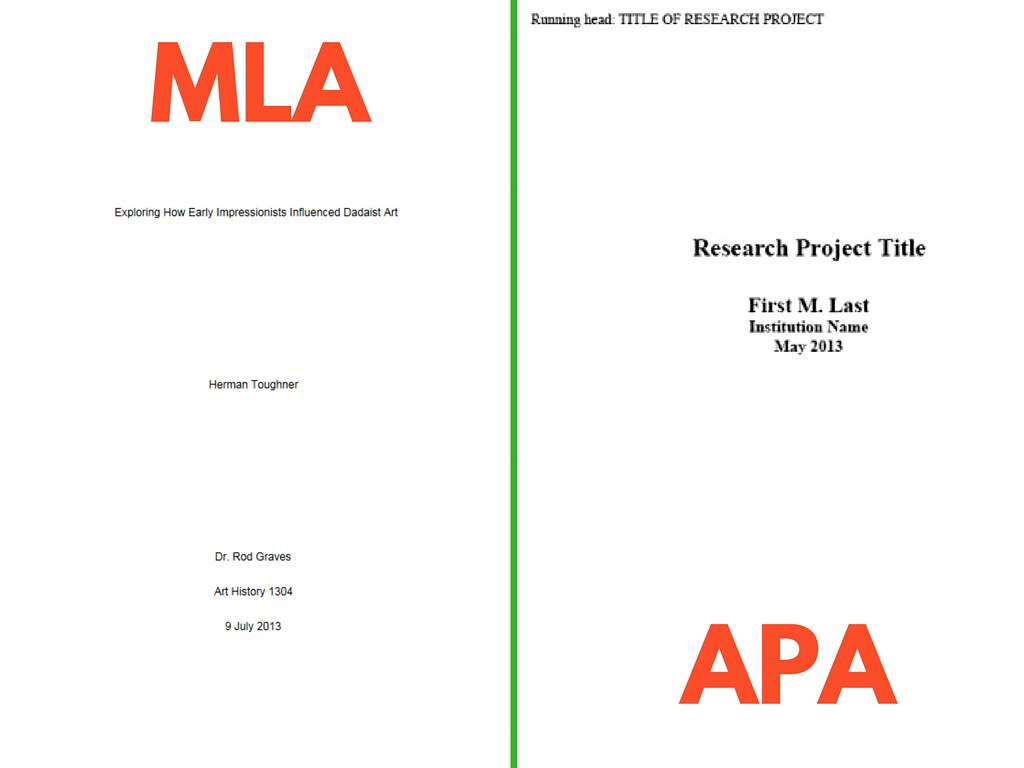
APA research paper cover page
Type the paper double-spaced on standard paper with one-inch margins on all sides. All pages should include a running head (page header) with a number flush right, and the shortened version of the title flush left. Type the "TITLE OF YOUR PAPER" in all-caps and make sure it is no longer than 50 characters including punctuation and spaces.
The title page should have a page header with words “Running head”, like “Running head: TITLE OF YOUR PAPER”. A few lines lower type the full title in Title Case. It should be less than 12 words and contain no abbreviations. Beneath the title type your first, middle and last name without degrees and titles. Include your institutional affiliation (the name of your college or university) beneath your name.
MLA research paper cover page
MLA standard does not require a title page, so provide all information on the first page, unless told otherwise. In the upper left corner provide your name, the professor’s name, the class, and the date. Type your title using standard capitalization rules and center it. All text should be double-spaced.
In case your professor requires a title page for an MLA style paper, follow these guidelines:
- Type the title of the paper one-third of the way down the page.
- Add your name several lines beneath the title.
- Type your class and professor’s name two inches below.
FAQ
-
How do you start a research paper introduction?
-
Should I write the introduction first?
-
Can I start a research paper with a question?
-
How long should the introduction be?
-
What should be written first in a research paper?